
This is a composite, a story assembled from many conversations, many trail runners, many aid stations. If you've spent time in ultra culture, you'll likely recognize it.
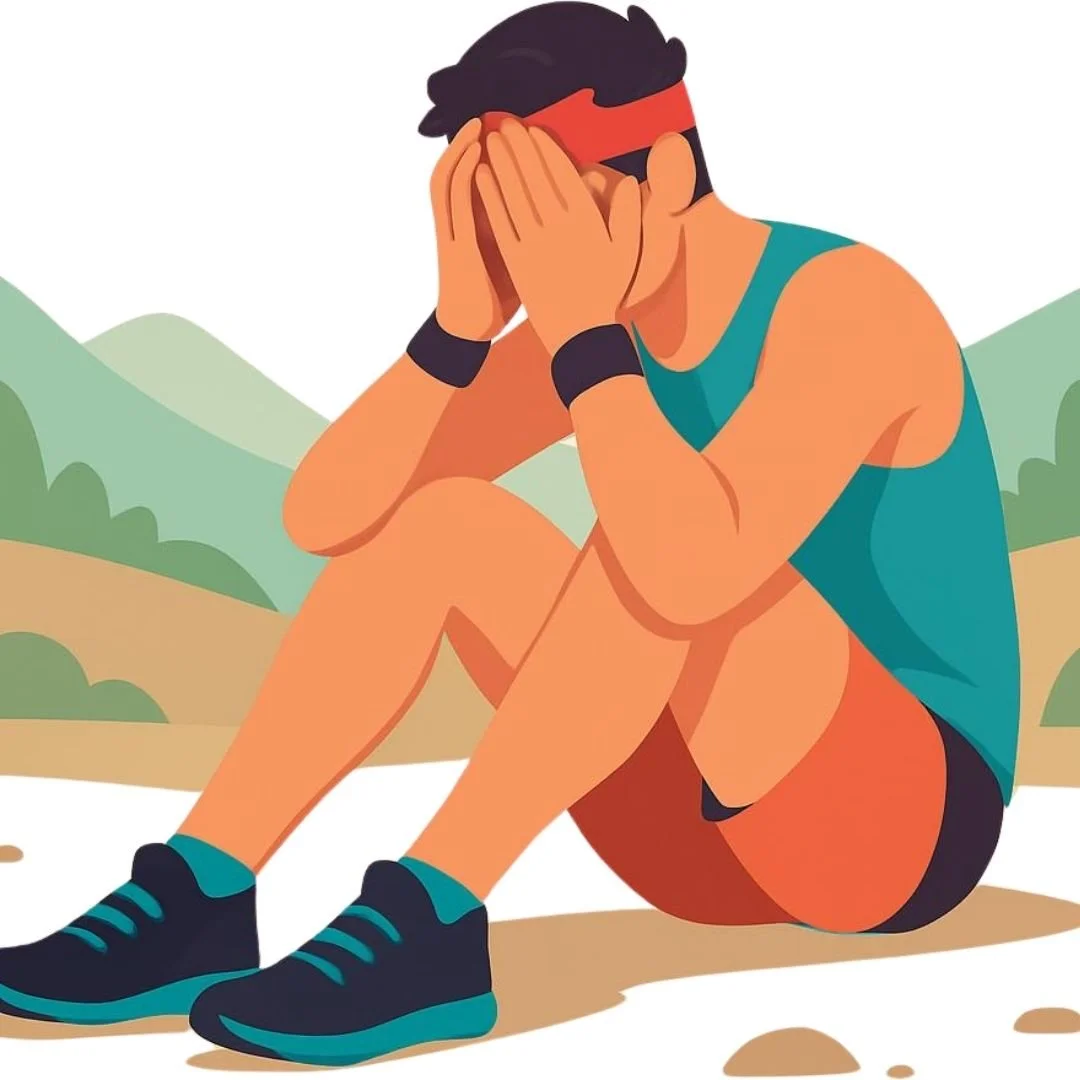
Call him Marcus. He'd run 23 ultras, paced friends through 100-milers, crewed at Western States, and had the kind of quiet confidence you develop after years in the mountains. Then, at mile 68 of a race he'd been building toward for fourteen months, his body shut down. He sat in an aid station chair, accepted a cup of broth from a volunteer, and made the hardest decision of his racing life.
He DNF'd.
Two years later, he was still running but something had changed. He was slower to sign up for races. He avoided conversations about that event. He'd stopped mentioning it in his running community, and when someone new found out, the heat that rose in his face wasn't embarrassment. It was something deeper and harder to name.
It was shame.
And in the two years since that aid station, shame had done what shame always does: it hadn't made him tougher. It had made him smaller.
The Distinction That Changes Everything
In terms of mental health, shame and guilt are often conflated in everyday language and in sports culture especially. But they are functionally different emotional experiences, and the research is unambiguous about which one serves athletes, and which one quietly dismantles them.
June Price Tangney, a psychologist at George Mason University who has spent decades studying moral affect, draws the line this way: shame is a global negative evaluation of the self — "I am a failure." Guilt is a negative evaluation of a specific behavior — "I failed in this moment." The target is different. And that difference matters enormously.
Shame says: I am bad. Guilt says: I did something I regret. The first attacks the person. The second addresses the behavior.
In Tangney and Dearing's landmark 2002 research on shame and guilt, shame-prone individuals were significantly more likely to withdraw, deny, and redirect blame outward — responses that are the opposite of what high performance requires. Guilt-prone individuals, by contrast, tended toward approach: wanting to make things right, to learn, to repair.
Tangney, J.P. & Dearing, R.L. (2002). Shame and Guilt. Guilford Press.
What This Looks Like Inside Ultra Culture
Endurance sport and ultrarunning specifically has a complex and increasingly scrutinized relationship with toughness. The values that make someone capable of running 100 miles through the night high pain tolerance, ability to push through discomfort, stubborn refusal to quit are the same values that make it almost impossible to process failure without turning it into something about character.
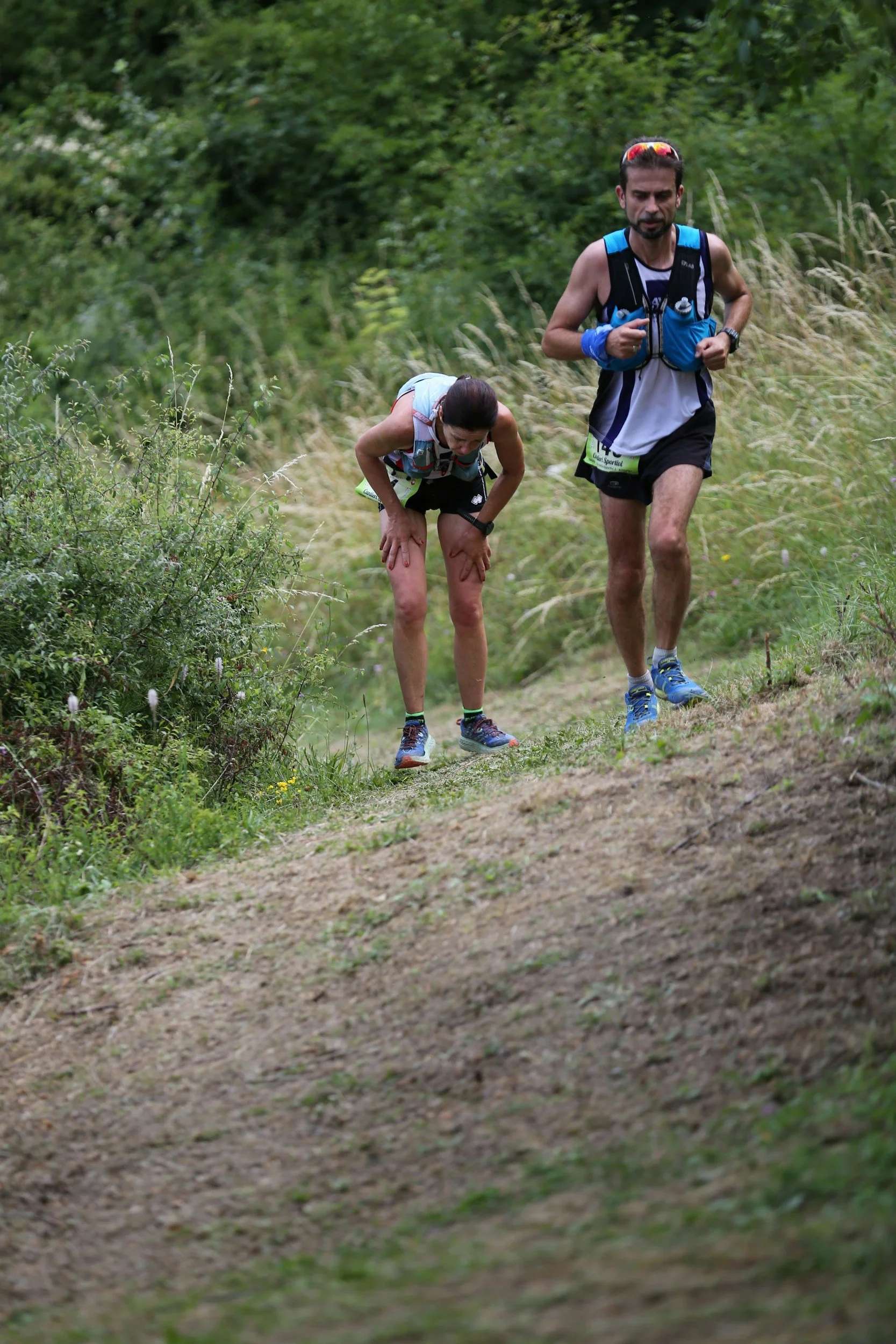
The DNF is the most visible example. DNF rates in 100-mile ultramarathons typically range from 30 to 50 percent at major events. At UTMB, at Hardrock, at Leadville — not finishing is a statistically normal outcome. And yet the culture around the DNF carries a weight disproportionate to its statistical frequency.
"I will not DNF" is a training mantra. Finishing — at any cost, under any conditions — is treated as moral proof of something. And when athletes don't finish, the internal language often shifts from "that was a hard day" to "I am not the athlete I thought I was."
That shift from behavior to identity is the signature of shame.
Sport psychologists Sarah Sagar and Joachim Stoeber found in their 2009 research that athletes who fear failure and experience shame around poor performance show higher rates of avoidance behavior, lower help-seeking, and increased perfectionism — the kind that protects the ego rather than improves performance. Their work aligns with a growing body of evidence suggesting that shame in sport doesn't produce resilience. It produces rigidity.
Sagar, S.S. & Stoeber, J. (2009). Perfectionism, fear of failure, and affective responses to success and failure. Journal of Sport & Exercise Psychology, 31, 602–627.
The Toughness Culture Is Getting Attention
In recent years, the conversation around mental health in elite sport has shifted. The IOC's 2019 Consensus Statement on mental health in elite athletes acknowledged that sport's traditional emphasis on mental toughness had created conditions in which distress was stigmatized and help-seeking was culturally penalized. Research by Gulliver and colleagues found that stigma — including the fear of being perceived as mentally weak — was the single most cited barrier to athletes seeking mental health support.
Gulliver, A., Griffiths, K.M., & Christensen, H. (2012). Barriers and facilitators to mental health help-seeking for young elite athletes. BMC Psychiatry, 12, 157.
The toughness ideal doesn't disappear when an athlete suffers. It just shapes the suffering. It tells them to train harder after the DNF instead of processing it. It tells them to push through the grief of an injury instead of sitting with it. It tells them that seeking support is the thing that weak athletes do.
What the research shows is that this model doesn't produce peak performance. It produces athletes who are harder on themselves and softer in the moments that require genuine courage — the courage to stop, to ask for help, to be honest about what happened.
Guilt, by Contrast, Is Adaptive
Guilt is not comfortable. It's not meant to be. But its discomfort is purposeful — it points toward something specific that can be addressed, changed, or repaired.
The guilt that comes after a poorly executed race looks like this: I went out too fast. I under slept in the week before. I ignored the signs that my nutrition was off. These are fixable things. They are data. And they allow an athlete to return to training with a specific course correction rather than a global wound.
Guilt-prone athletes ask: what can I learn from this? Shame-prone athletes ask: what does this say about who I am?
Kristin Neff's research on self-compassion offers a complementary frame. Her work consistently shows that self-compassion — treating oneself with the same care one would offer a struggling friend — does not reduce motivation or performance standards. It improves them. Athletes who practice self-compassion show better recovery from failure, higher intrinsic motivation, and less fear of making mistakes.
Neff, K.D. & Germer, C.K. (2013). A pilot study and randomized controlled trial of the mindful self-compassion program. Journal of Clinical Psychology, 69(1), 28–44.
Self-compassion is not the opposite of high standards. It is the psychological ground from which high standards can actually be sustained.
Back to Marcus
What changed things for Marcus wasn't a pep talk or another race. It was the work of separating what had actually happened — he withdrew from a race when his body reached a genuine limit — from what he'd made it mean: that he was fundamentally not the athlete he believed himself to be.
The first is a fact. The second is a story — and shame writes that story in permanent marker.
When he could separate the two, something shifted. The DNF didn't go away. But it became information rather than evidence. It became part of a larger athletic narrative rather than the chapter that defined the whole book.
He raced again. He finished. And when someone else at an aid station made the same decision he had, he was the one who sat with them and said: "That took guts. Let's talk about what this means for next time."
What to Do With This
If you are carrying shame from a race, an injury, or a season that didn't go the way you planned, here is the clinical reality: shame is not going to make you tougher. Research doesn't support that. Experience doesn't support it. The athletes I've worked with who've pushed hardest through shame have almost uniformly paid a price — in overtraining, in isolation, in the quiet erosion of their love for the sport.
Guilt is survivable. It is even useful. But guilt requires you to stay specific — to keep the failure attached to the behavior, not the self.
The question worth asking after a hard race, a DNF, or a season that broke you is not: what does this say about who I am?
The question worth asking is: what does this tell me about what I need?
That second question is where good coaching lives. It's where therapy lives. It's where the genuine version of toughness — the kind that holds up across years, not just miles — actually begins.