
When Running Is Your Whole Identity
You signed up for the race months ago. You've logged the miles, the vert, the early mornings, the time away from family. Trail and Ultrarunning isn't just something you do — it's who you are. And honestly? That level of commitment is part of what makes you good at this.
But here's a question worth sitting with for a moment:
Who are you when you can't run?
Not a trick question. Not a warning that injury is coming (though it might). Just a genuine, honest question — because for a lot of runners, the answer is more complicated than it should be.
If you felt a little uncomfortable reading that, you're in the right place.

I remember the first time (and second) I struggled with that question…
The first was in 2008 when the pain in my Achilles was searing. I couldn’t run for days. Days turned to weeks – weeks to months – and eventually several years. I tried everything and was getting nowhere fast. I cried. I was numb. I felt helpless. I was depressed.
All I wanted was to qualify for the Boston Marathon and now it was looking like I could never run again. I ate, slept and breathed running. I knew the names every Olympic athlete at the marathon trials – I became infatuated with the story of Steve Prefontaine – this was my thing. These were my people.
But, the rug was swept out from under me. I was so fused with running being my identity - of who I was, I couldn’t see the life that was right in front of me. I slowly overcame the injury – got back to running – would eventually qualify for Boston and start running ultras…then it happened again.Long run after long run – days up in the mountains. I missed out on birthday parties – family get togethers – friends wanting to meet up for breakfast. My wife wondered where I went for hours a time – with a young kiddo in the house.
Yea…I’ve been there too.
Running is part of who I am – it’s led me to incredible things. But it’s not all of who I am…
What Is Identity Fusion — And Why Do Runners Experience It?
Identity fusion is what happens when one role — in this case, being a runner — becomes the organizing center of who you are. It's not that running is important to you. It's that running IS you.
This is more common in endurance sports than almost anywhere else, and it makes sense. Ultra and trail running demands a lot. It shapes your schedule, your social circle, your sense of accomplishment, and your relationship with your own body. Over time, the line between "I run" and "I am a runner" quietly disappears.
And when that line is gone, everything that affects your running also affects your identity.
Signs your identity might be fused with running:
• A bad race or a DNF doesn't just sting — it feels like a personal failure, like something is wrong with you
• Rest days leave you feeling restless, purposeless, or vaguely guilty
• Injury doesn't just sideline you physically — it makes you feel like you've lost yourself
• You struggle to connect with people who don't run (It’s a running joke in my house about the circle of conversations)
• Your mood on any given day is largely determined by how your run went
• You avoid thinking about what life looks like after running
If any of those landed, that's not a character flaw. It's a pattern that develops naturally in athletes who care deeply about what they do. The sport rewards total commitment — and identity fusion is often what total commitment looks like from the inside.
The Real Cost of Running Being Your Whole Story
Here's the thing about identity fusion: it works fine, until it doesn't.
When your training is going well and the races are good, being deeply identified with running feels like a superpower. The passion is real. The drive is real. The sense of meaning is real.
But running is also unpredictable. Bodies get injured. Life gets complicated. Races get cancelled or go sideways. (Just think about what happened during the COVID shut downs) Seasons end. And when running is the whole story, any disruption to running becomes a disruption to your entire sense of self.
Identity fusion doesn't show up as a problem until the thing you're fused with gets taken away.
That's when a stress fracture becomes an existential crisis. That's when a DNF carries weight that goes way beyond the race. That's when a taper feels unbearable because without the miles, you don't quite know what to do with yourself.
None of that is weakness. But it is worth paying attention to.
You Run. Running Doesn't Have to Run You.
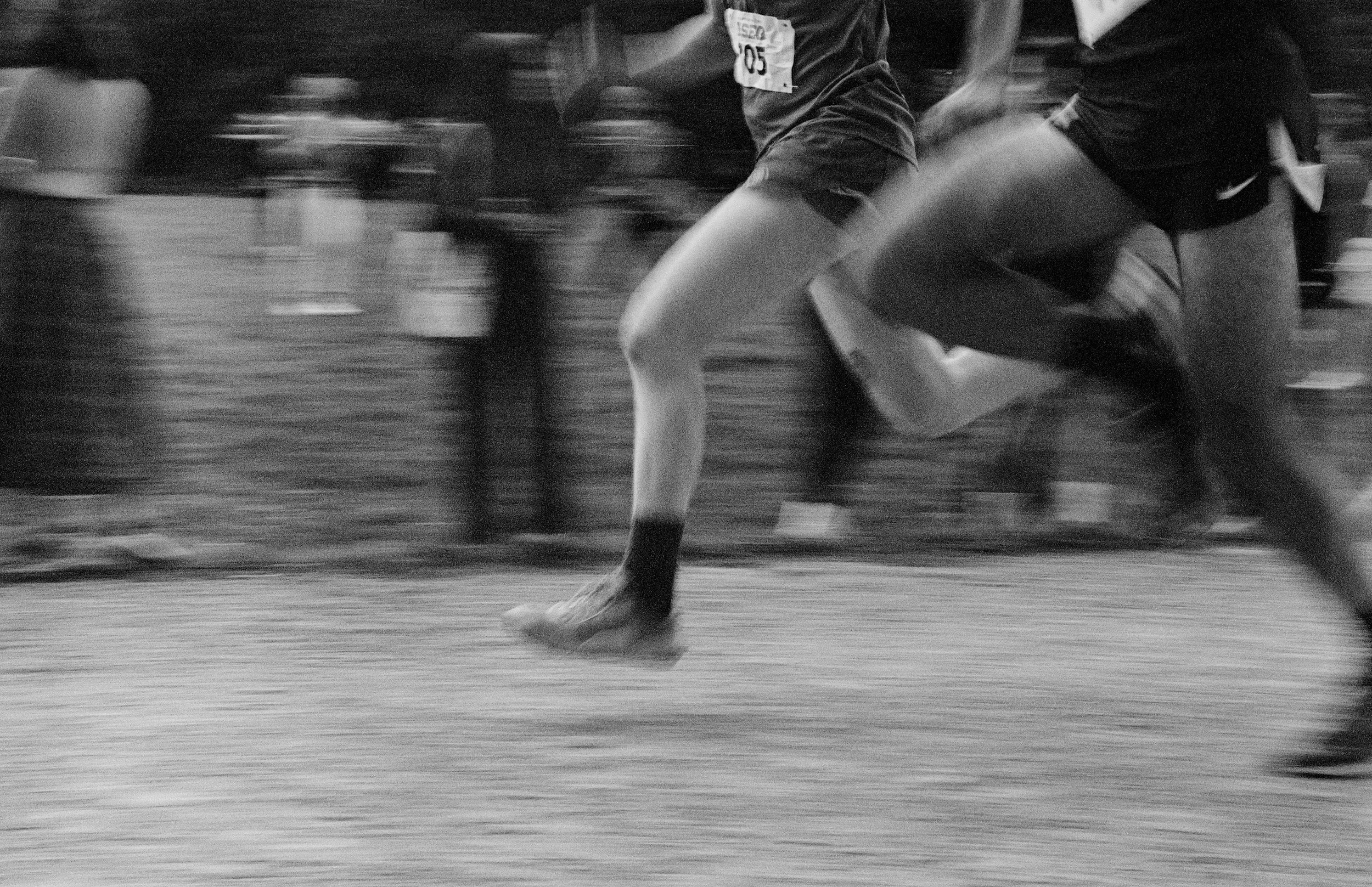
This isn't about running less. It's not about caring less, or dialing back your commitment, or becoming a casual jogger who doesn't really mind skipping a week.
It's about something more subtle — and ultimately more powerful.
Psychological flexibility is the ability to hold your sense of self with a little more room. To be deeply connected to running while also being connected to other parts of who you are. To know that your worth, your identity, and your sense of purpose don't all live in the same place — so that when running gets hard, you have somewhere else to stand.
Think of it this way: running is how you express who you are. It's one of the most vivid, powerful ways you show up in the world. But it's not the only thing you are — and it doesn't have to be.
Running is one chapter. Not the whole book.
The athletes who navigate injury, transition, and hard seasons with the most resilience aren't the ones who care less. They're the ones who have a self to come back to.
Starting to Explore: Who Are You Beyond the Miles?
This doesn't have to be a dramatic exercise in self-reinvention. It can start quietly, with a few honest questions.
1. What do you value — not just in running, but as a person?
Discipline. Courage. Connection. Pushing through discomfort. Showing up for yourself. These are real values — and they exist independently of any finish line. Running is one way you live them. What are the others?
2. What parts of yourself have you let go quiet?
A lot of runners describe looking up after years of heavy training and realizing they've drifted from friendships, hobbies, creative outlets, or parts of themselves that used to feel important. Not because they were deliberately abandoned — just gradually crowded out. Which of those might still be worth something?
3. What would you tell a younger version of yourself right now?
This one tends to cut through the noise. If you could talk to yourself before running became everything — what would you want that version of you to know? What would you want to protect?

4. Who are you on the days you can't run?
Not who do you wish you were, or who you think you should be. Who are you, actually, on rest days or recovery weeks? What shows up? That's useful information — not something to judge, just something to know.
These questions aren't meant to have clean answers right away. They're meant to open a door that, for a lot of runners, has been closed for a while.
The Edge Doesn't Go Away — It Gets More Stable
There's a fear that comes up sometimes when athletes start doing this kind of work: that exploring identity means softening something. That building a broader sense of self means caring less, competing with less fire, losing the thing that makes them good.
In practice, the opposite tends to be true.
When you're not using running to hold your entire identity together, you can actually run with more freedom. The stakes of any single race or training block don't carry existential weight. You can take risks. You can recover from setbacks without them meaning something about you as a person. You can show up fully — because you're not also asking running to be your therapist, your best friend, and your entire sense of worth.
The strongest athletes have a self to come back to. That's not a weakness in the sport. It's the foundation.
If any of this resonated — if you recognized yourself in the signs of identity fusion, or if you've been through a season (or an injury, or a race) that knocked you sideways in a way that surprised you — that's exactly the kind of thing worth exploring with support.
I work with ultra and trail runners navigating the mental side of the sport. That includes identity, performance, injury recovery, and everything in between.
If you're curious about what that work looks like, I'd love to connect.