
Athlete Burnout: How to Recognize It Before It's Too Late
I noticed the obvious signs late in the August last year. It was my umpteenth time trying to finish Lead Challenge.
I was starting to abhor Leadville.
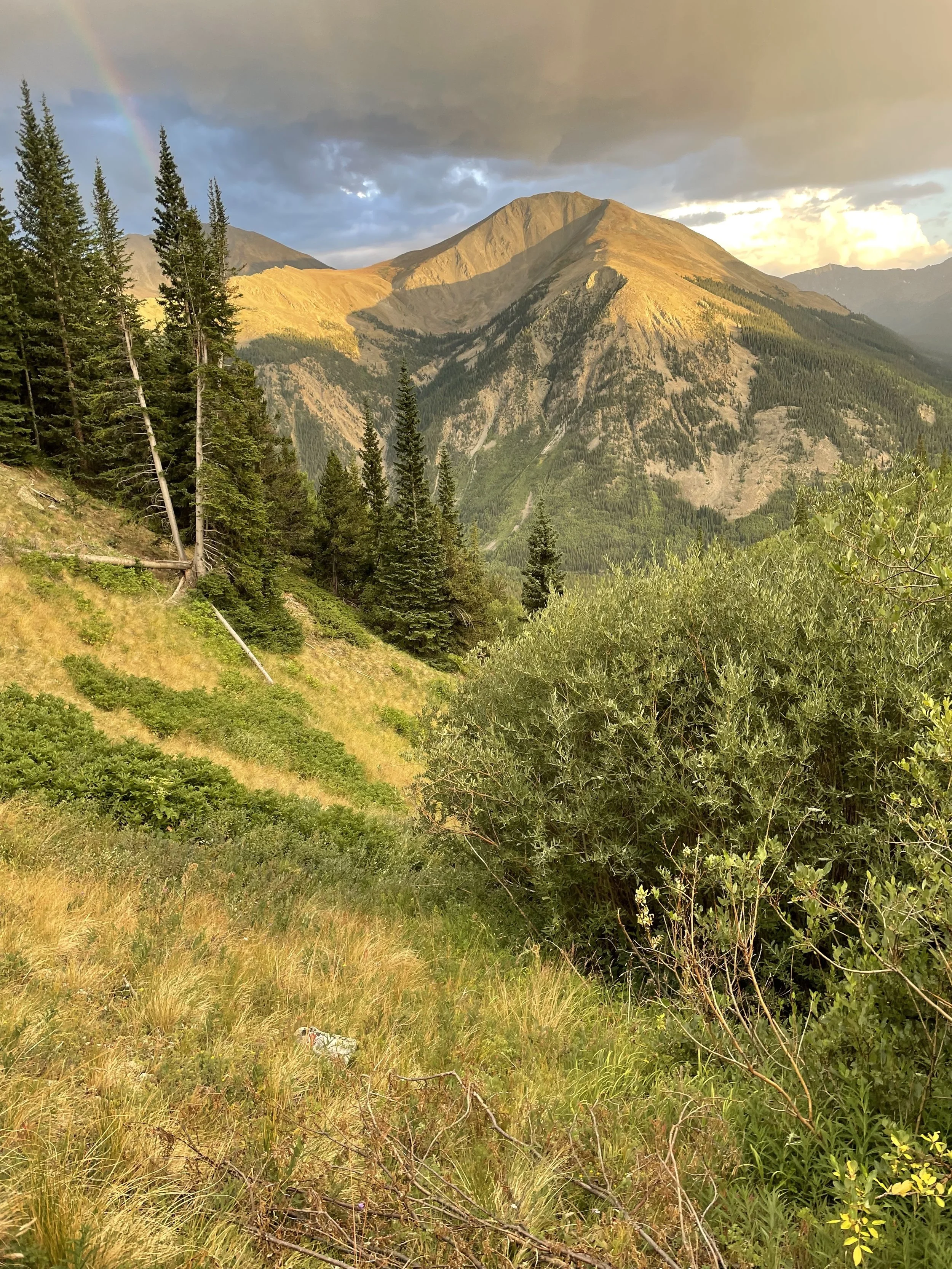
A rainbow from my last venture up Hope Pass during the Leadville 100.
The vibe around the race series was getting under my skin. The people at the starting line of both the hundred-mile bike and hundred-mile run were grating...
I was annoyed with everything about the race, the scene… besides the fact that on this last race I couldn’t sleep more than hour because of a screaming child in a campground.
I was going through the motions to get it done. Don’t get me wrong, I wanted to get it done - I really wanted to finish this races series - but I was going through the motions…I was starting to get burnt out. I may not have fully been there – there were pieces that were missing as you’ll see here - but I was definitely on track to burnout and I’m sure if I did another year of Leadville training, I’d be in it – deep.
It starts subtly. You drag yourself out of bed for a workout you used to love. You finish a long run and feel nothing, meh…yuck, not the good-tired, just flat. You look at your training plan and feel a flicker of dread instead of anticipation.
You tell yourself it's just a hard week. You push through. Because that's what you do. I mean Goggins does this all the time, right?
But for a growing number of endurance and mountain sport athletes, that feeling doesn't go away with a rest day or even a rest week. It deepens. And what starts as a vague heaviness can quietly become something that takes months sometimes longer to climb out of.
That's burnout. And the athletes most at risk are often the last ones to recognize it.
What Is Athlete Burnout — And What It Isn't
Burnout is not a bad week. It's not overtraining. And it's not a sign that you're mentally weak.
Athlete burnout is a well-defined psychological syndrome with three core dimensions, first formally adapted for sport by researchers Raedeke and Smith in 2001:
1. Physical and emotional exhaustion: a deep, persistent fatigue that goes beyond tired legs. You're exhausted in a way sleep doesn't fix, emotionally depleted by the very thing that used to energize you.
2. Reduced sense of accomplishment: a creeping feeling that no matter how much you do, it's never enough. PRs feel hollow. Training milestones go unnoticed internally. You evaluate your performance harshly and consistently, regardless of the objective results.
3. Sport devaluation: the most telling dimension. The sport you once loved starts to feel meaningless, burdensome, or even aversive. You might feel cynical about training, contemptuous of race culture, or simply detached from something that used to define you. This is where I was at the end of August last year…
You need all three to be in full burnout. But they rarely arrive all at once which is exactly why burnout is so often missed until it's severe. That’s why I was missing it – a coach – a therapist – trained in applied sport psychology – I didn’t see it.
It's also worth being clear about what burnout is not: it is not overtraining syndrome (OTS). OTS is a physiological condition caused by excessive training load without adequate recovery. Burnout is primarily psychological and critically, it can develop even in athletes with moderate training loads if life stress, lack of autonomy, or chronic pressure are high. You can be physically fresh and completely burnt out. The two often co-exist, but they're not the same thing.
The Numbers Are Getting Worse
Research published in a 2022 meta-analysis found something that should get every coach and athlete's attention: burnout symptoms in athletes have been increasing steadily over the past two decades. Sport devaluation and reduced sense of accomplishment, two of the three core dimensions, have both trended upward since the late 1990s.
More recent data shows that over 10% of athletes experience moderate to severe burnout symptoms at some point during a season. A January 2025 scoping review in Frontiers in Psychology, analyzing 32 longitudinal studies across 14 countries, confirmed that burnout is multidimensional, nonlinear, and closely tied to both training demands and psychological factors including coaching relationships, social support, and perceived autonomy.
And a 2025 study published in Psychology of Sport and Exercise found that burnout, particularly reduced sense of accomplishment and sport devaluation, directly and negatively predicts competitive performance. In other words, burnout doesn't just make athletes miserable. It makes them slower. Maybe, it wasn’t just aging that was impacting my performance over the years in Leadville…
The problem isn't that we don't know burnout exists. It's that the culture of endurance sport makes it almost impossible to recognize it in yourself.
The Warning Signs Most Athletes Miss
The physical signs of burnout: persistent fatigue, disrupted sleep, increased illness —often show up last, after the emotional and cognitive signals have been waving red flags for weeks.
Here's what to actually watch for:
Emotional Signs (These Come First)
Dread before training. Not reluctance, not laziness —genuine dread. The feeling in your stomach the night before a long run that used to be anticipation has quietly shifted to something else. Admittingly, I experienced a bit of this before long hard efforts on the bike.
Irritability that doesn't make sense. Snapping at people you love, feeling unreasonably angry about minor inconveniences, finding yourself short-tempered in ways that feel out of character.
Emotional numbness toward your sport. Finishing a race or a hard workout and feeling nothing. Not tired-but-satisfied, not even disappointed. Just empty.
Cynicism about the community you used to love. Finding yourself rolling your eyes at training talk, feeling contemptuous of other athletes, or withdrawing from the people and spaces that used to feel like home.
Cognitive Signs (These Come Next)
Inability to focus during workouts. Your mind wanders constantly. You can't stay present in your body or in the effort.
Negative self-talk that escalates. The inner critic gets louder and more persistent. Not the useful kind that pushes you harder, but the kind that tells you you're not enough, you'll never be enough, why bother.
Loss of meaning. You start asking "why am I doing this?" and not finding a satisfying answer. Goals that used to matter feel arbitrary.
Helplessness. A growing sense that no amount of effort will produce the results you want — that the training isn't working, that you're falling behind, that it's pointless.
Behavioral Signs
Missing workouts without a clear reason. Not because of injury, not because of genuine rest — just not going. And feeling relieved afterward rather than guilty.
Isolating from training partners. Avoiding group runs, skipping the group chat, showing up alone and leaving quickly. Social withdrawal is a significant early signal.
Compulsive training as a coping mechanism. The flip side also exists: some athletes double down and train more when burning out, using the physical effort to numb the psychological distress. This accelerates the spiral.
Physical Signs (These Confirm What You Already Knew)
Persistent fatigue that sleep doesn't resolve
Frequent minor illness (suppressed immune function)
Sleep disruption — difficulty falling asleep, waking at 3am, unrestful nights
Headaches, chest tightness, dizziness
Appetite changes in either direction
Research confirms that burnout is associated with all of the above physical symptoms, along with lower immune resistance and increased risk of injury. But by the time the body is visibly struggling, the psychological signs have usually been present for weeks or months.
Why High Performers Are the Last to Notice
There's a painful irony at the heart of athlete burnout: the traits that make endurance and mountain sport athletes exceptional are the same ones that make them blind to burnout until it's severe.
Persistence. Pain tolerance. The ability to override discomfort and push through. The deep identification with being an athlete. These are assets — until they become a liability.
Identity fusion is one of the biggest risk factors. When being an athlete is central to who you are, recognizing burnout feels like admitting that you are failing, not that your sport relationship is struggling. Research on athletic identity consistently shows that athletes with higher athletic identity experience more psychological distress when their performance or participation is disrupted. They don't just lose a race — they lose themselves.
The culture of toughness compounds this. Endurance sport communities celebrate suffering. Type 2 fun is the currency of respect. Complaining about mental load — about dread, about emptiness, about not wanting to train anymore — feels like weakness, or ingratitude, or both. So athletes stay quiet. They push through. They tell themselves everyone feels this way.
And then there's the normalization of suffering itself. When your baseline is 100-mile races in mountain terrain, when you routinely choose discomfort as a lifestyle, the threshold for recognizing that something is wrong gets significantly elevated. Dread starts to feel normal. Flatness feels like just another hard training block.
A 2024 study found that perfectionism is strongly correlated with burnout, and that this relationship holds regardless of coping styles or intrinsic motivation — suggesting that the cognitive patterns driving perfectionist athletes toward excellence are the same ones accelerating their path to burnout.
The Burnout-Depression Connection
This is the part nobody in endurance culture wants to talk about.
Unaddressed burnout is a significant pathway to clinical depression. Research has found clear associations between burnout — particularly the exhaustion and sport devaluation dimensions — and elevated depressive symptoms. A comprehensive 2023 meta-analysis found that burnout is linked to insomnia, depression, anxiety, body image dissatisfaction, and significantly lower life satisfaction.
Depression in athletes often doesn't look like the cultural image of depression — crying, unable to get out of bed, visibly struggling. In athletes it often looks like persistent flatness, unexplained anger, going through the motions, using training to cope while increasingly withdrawing from everything else.
The research on social support is particularly important here: athletes with strong social connection and perceived relatedness are significantly less likely to develop burnout — and those who do are more likely to recover. Isolation accelerates burnout; connection protects against it. This matters enormously in a sport culture that celebrates solo suffering and self-reliance.
If you're noticing the emotional and cognitive warning signs above and they've been present for more than a few weeks, that's worth taking seriously — not powering through.
What to Do When You Recognize Yourself Here
Short-Term: Permission to Stop
The first thing burnout requires is rest — real rest, not anxious rest where you're counting the days until you can train again. Give yourself genuine permission to step away without guilt and without a plan for when you'll return. This is harder for endurance athletes than almost any physical challenge they've faced. Do it anyway.
Medium-Term: Rebuild the Relationship With Your Sport
Return to movement on your own terms. Hike instead of run. Paddle instead of race. Remove all performance metrics — no Strava, no heart rate, no pace — and see what happens when the activity is about nothing except being in your body. This is about rediscovering what drew you to this in the first place, before it became something you owed.
Long-Term: Address the Structure
Sustainable training requires autonomy, adequate recovery, and a training environment with social support and a coaching relationship that doesn't feel controlling. Research consistently shows that a controlling coaching style is one of the strongest predictors of burnout, while an autonomy-supportive environment is protective. If your training structure or coaching relationship is burning you out, that's a structural problem, not a personal failing.
Seek Professional Support
A therapist with experience in athlete populations can do things a rest week can't. Cognitive behavioral techniques, Acceptance and Commitment Therapy - goal reframing, identity work — these are evidence-based tools that address the root causes of burnout rather than just the symptoms. If burnout has crossed into depression, a clinical provider who understands the athlete context is important. Look for someone who won't automatically tell you to just stop training — the goal is a sustainable relationship with sport, not abandonment. If you’re here in Colorado you can reach out to me for a free 20-minute introductory call as this is an area I am passionate about.
The Bottom Line
Burnout is not a phase. It's not a character flaw. And it's not fixed by gritting your teeth through one more training block.
The athletes who recover well from burnout are the ones who name it early — who learn to distinguish between the productive discomfort that makes them strong and the deeper signal that something in the system needs to change.
That requires a different kind of courage than running 100 miles. It requires being honest about what's happening inside, even when the culture tells you to push through.
You've already proven you can suffer. The harder thing is learning when not to.
Reflecting on my Lead Challenge experience – while I wasn’t totally there, I was getting close. I stepped off the Leadville bus this year – and possibly the next few to re-center myself, take inventory, reset and refocus.
If you're experiencing burnout or think you might be and you’re here in Colorado reach out to me for 20-minute consultation to see if we’re a good fit.
Sources:
Raedeke, T. D., & Smith, A. L. (2001). Development and preliminary validation of an athlete burnout measure. Journal of Sport and Exercise Psychology, 23(4), 281–306. https://doi.org/10.1123/jsep.23.4.281
Madigan, D. J., Olsson, L. F., Hill, A. P., & Curran, T. (2022). Athlete burnout symptoms are increasing: A cross-temporal meta-analysis of average levels from 1997 to 2019. Journal of Sport and Exercise Psychology, 44(3), 153–168. https://doi.org/10.1123/jsep.2020-0291
Dišlere, B. E., Mārtinsone, K., & Koļesņikova, J. (2025). A scoping review of longitudinal studies of athlete burnout. Frontiers in Psychology, 16, Article 1502174. https://doi.org/10.3389/fpsyg.2025.1502174
Olsson, L. F., Glandorf, H. L., Black, J. F., Jeggo, R. E. K., Stanford, J. R., Drew, K. L., & Madigan, D. J. (2025). A multi-sample examination of the relationship between athlete burnout and sport performance. Psychology of Sport and Exercise, 76, Article 102747. https://doi.org/10.1016/j.psychsport.2024.102747
Glandorf, H. L., Madigan, D. J., Kavanagh, O., & Mallinson-Howard, S. H. (2025). Mental and physical health outcomes of burnout in athletes: A systematic review and meta-analysis. International Review of Sport and Exercise Psychology, 18(1), 372–416. https://doi.org/10.1080/1750984X.2023.2225187
Xu, A., Luo, X., Qiu, X., & Lu, C. (2024). Perfectionism and adolescent athletes' burnout: The serial mediation of motivation and coping style. Behavioral Sciences, 14(11), Article 1011. https://doi.org/10.3390/bs14111011
DeFreese, J. D., & Smith, A. L. (2014). Athlete social support, negative social interactions, and psychological health across a competitive sport season. Journal of Sport and Exercise