
Imposter Phenomena in Mountain Sports: Why the Most Capable Athletes Feel Like Frauds
The Voice in Your Head at Mile 40
You've trained for months. You've run thousands of vertical feet. You've been out in the dark, in the cold, eating gels you've stopped tasting. And yet — somewhere between the trailhead and the finish line — a voice creeps in:
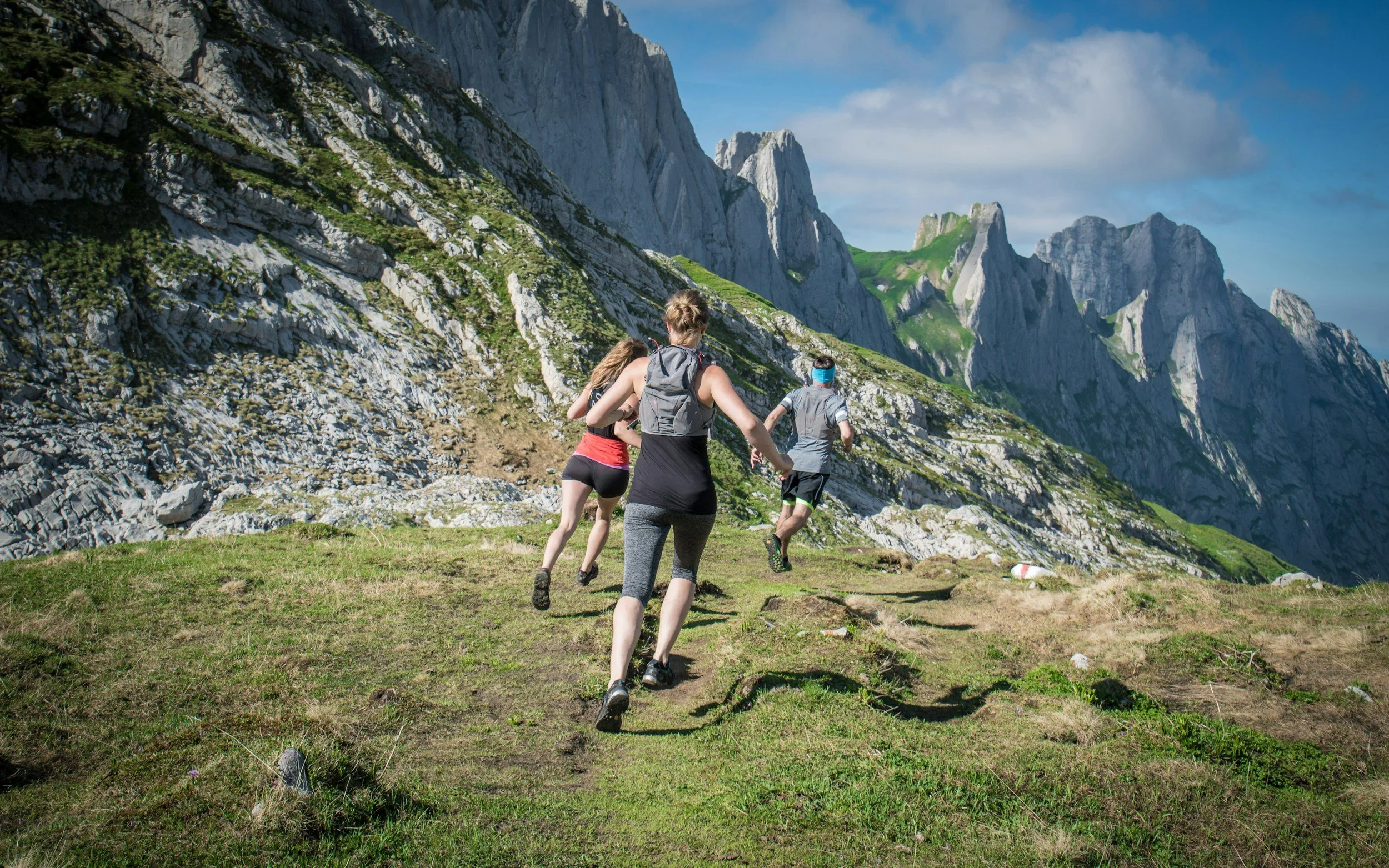
"Who do you think you are? A real ultrarunner wouldn't be struggling this much."
Sound familiar? If you just nodded your head — you're not alone, and you're definitely not a fraud. What you're experiencing has a name: imposter phenomena. And in mountain sports culture, it is absolutely everywhere.
What Is Imposter Phenomena? (And Why I Call It That)
First, a quick note: you might know this as 'imposter syndrome,' but researchers who study it — starting with psychologists Pauline Clance and Suzanne Imes, who first described it in 1978 — actually prefer the term imposter phenomena. Why? Because syndrome implies a disorder, something broken inside you. Phenomena is more accurate: it's a pattern of thinking, not a flaw in your wiring.
Imposter phenomena (IP) is the experience of believing your accomplishments are undeserved, that you got lucky, that you're secretly less capable than people think — and living in fear that you're about to be "found out." It was originally studied in high-achieving women, but research has since shown it affects all genders, across nearly every high-performance domain.
Mountain sports? We're a breeding ground for it. Let me explain why.
Why Mountain Athletes Are Especially Vulnerable
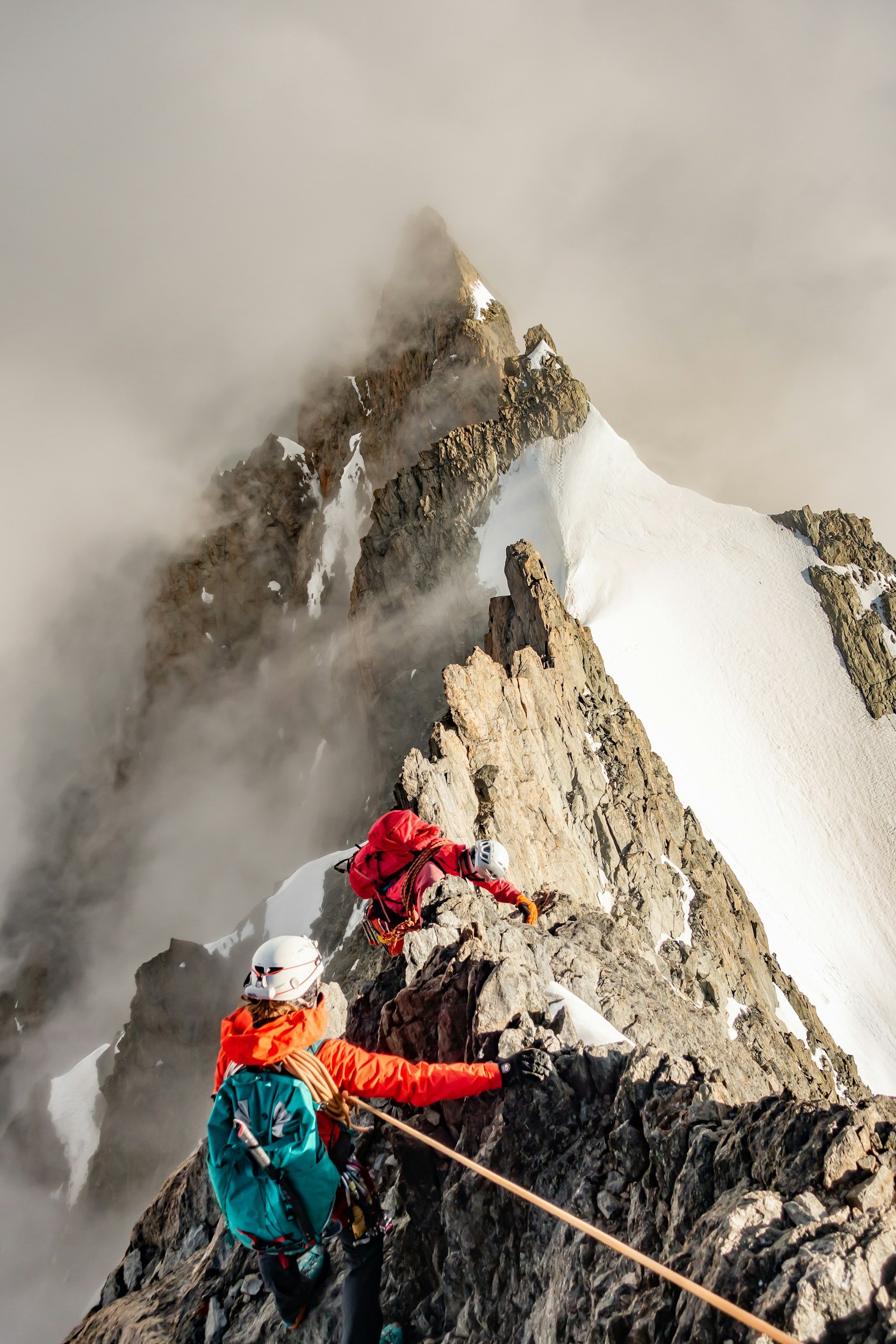
There's something unique about the culture that draws people to ultrarunning, climbing, mountaineering, skimo, and mountain biking. We're drawn to challenge, to discomfort, to constantly pushing limits. That same drive that gets you to the start line of a 100-miler or the base of a technical route is also the drive that never lets you feel like enough.
Here's what I see in my work as both a therapist and an ultrarunning coach:
The comparison trap is relentless. Instagram shows us elite FKT attempts and podium finishes. We compare our midpack performances to the highlight reel of people who train full-time. We forget that the person whose summit photo we're staring at has also cried on a descent and questioned their place on the mountain.
The "sufferfest" culture glorifies a particular kind of athlete. If you didn't come from a running background. If you started late. If you walk the uphills or need poles or take longer than average — the culture has ways, subtle and not so subtle, of making you feel like you're doing it wrong.
Our benchmarks keep moving. You ran your first 50K, so now you feel like a fraud at 50-mile events. You finish a 50-miler and suddenly feel like you don't belong at 100s. You summit your first 14er and feel like a tourist at an alpine objective. The goalposts never stop moving.
We overattribute success to luck or conditions. "I only finished because the weather was good." "I only got the CR because the fast people didn't show up." "Anyone could have climbed that route in those conditions." Sound familiar?
As a therapist, I can tell you this: that voice saying 'you don't belong here' is not your intuition. It's not truth. It's a pattern — a cognitive distortion — and like all patterns, it can be interrupted.
The Research Is Worth Knowing
Studies suggest that imposter phenomena affects up to 70% of people at some point in their lives. It's more prevalent in high-achievement contexts and environments where identity is tied closely to performance — which describes mountain sports perfectly. A systematic review by Bravata and colleagues (2020) found that imposter phenomena is commonly linked to anxiety, depression, and burnout — all things that directly impact athletic performance and, more importantly, your enjoyment of the sport.
Here's what I know after years of working with athletes: struggling doesn't mean you're failing. It means you're in it. Whether you're having the season of your life or the hardest training block you've ever experienced — the voice that says you don't belong doesn't discriminate. It shows up for the person on the podium and the person who just barely made the cutoff. The doubt, the hard days, the feeling that you're not enough — that's not evidence against you. That's just what caring deeply feels like sometimes.
What It Looks Like Across Mountain Sports
I want to be specific here, because imposter phenomena shows up differently depending on your sport:
Ultrarunners:
"I'm not a real ultrarunner — I take walk breaks." "I don't run enough miles per week." "Everyone else seems to handle this better than me." "I only finished because I'm stubborn, not because I'm actually good."
Climbers & Mountaineers:
"I'm sandbagging by saying I climb 5.10." "I should have onsighted that." "Real alpinists don't need to bail." "I was scared on that route — skilled climbers don't feel fear like that."
Skimo Athletes:
"I'm just a recreational skier who does races — I'm not a real skimo athlete." "I don't have the right gear / body / background." "The Europeans all make this look easy."
Mountain Bikers:
Here’s one that I experience all the time: "I hike-a-bike too much to call myself a mountain biker." "I'm too cautious on descents." "Everyone in my group is way more skilled than me."
Different sports, same voice. Different gear, same doubt.
Five Things That Actually Help
I want to give you something practical here, not just validation (though that matters too). As a therapist, these are the approaches that I've seen make a real difference:
Name it when it happens. The moment you notice the voice saying 'you don't belong here,' label it: 'That's imposter phenomena talking.' You don't have to argue with it. Just naming it creates distance from it.
Build an evidence file. Start keeping a literal list — in your phone, a journal, wherever — of things you've done that contradict the imposter narrative. Finished a race. Got through a hard training block. Helped a newer athlete. Showed up when you didn't want to. Facts are stubborn things.
Talk to other athletes honestly. Not about PRs and summits — about the doubt. Almost every experienced mountain athlete has imposter phenomena stories. The culture just doesn't make space for them. Be the person who creates that space.
Separate performance from identity. You are not your finishing time. You are not your grade. You are not your vertical gain. When we tie our worth to metrics in a sport that is inherently unpredictable (weather, injury, life), we set ourselves up for constant threat. You belong in mountain sports because you show up. Full stop.
Work with a therapist or coach who gets it. Imposter phenomena that's deeply entrenched — especially if it's tangled up with perfectionism, anxiety, or past experiences — deserves real attention. Sport psychology and therapy aren't just for elite athletes. They're for anyone who wants a better relationship with the thing they love.
You Earned Your Place on This Mountain
I'll leave you with this: the mountains don't care about your pace per mile, your grade, or your FKT attempt. They're indifferent in the most clarifying way. What you bring to those spaces — your effort, your presence, your willingness to keep going when it's hard — that is what makes you a mountain athlete.
The voice that says you don't belong? That voice has never run a single mile, climbed a single pitch, or skinned a single skin track. You have.
You don't have to earn your place. You already have it.
If this hit home, save it to share with a training partner who needs to hear it. And follow along — I'll be sharing more on the psychology of mountain sports performance
Bravata et al. (2020). Prevalence, predictors, and treatment of impostor syndrome: A systematic review. Journal of General Internal Medicine, 35, 1252–1275. https://doi.org/10.1007/s11606-019-05364-1